Camo Bucket Hat demand is growing beyond outdoor use. Buyers now expect practical design, consistent quality, and dependable wholesale service. The Outdoor Industry Association reported 175.8 million U.S. participants in outdoor recreation in 2023. That figure signals a broad customer base for functional headwear, not only specialist consumers. Grand View Research also identifies hats and caps as an expanding global accessories category, supported by casual fashion and outdoor lifestyles. These trends make product selection more complicated than choosing the boldest camouflage print.
This guide evaluates ten Camo Bucket Hat options for wholesale buyers. Each selection should be judged by fabric weight, brim stability, stitching accuracy, ventilation, sweatband comfort, and print consistency. Cotton twill feels familiar, while recycled polyester may offer faster drying and easier care. UPF labeling can add value, but suppliers should verify test documentation instead of trusting vague claims. Important details include minimum order quantity, sample approval, size grading, carton protection, and production lead time. Small defects become expensive when ordered by the thousand.
Buyer experience matters here. A sample that looks excellent under showroom lighting may fade after repeated washing. That happened in more than one purchasing review. It is worth checking colorfastness, seam strength, and shrinkage before committing. Supplier audits and recognized quality systems, such as ISO 9001-based processes, can improve confidence, though certification alone proves little. The final ranking balances appearance, durability, customization potential, landed cost, and supplier reliability. Some choices may not suit every market. That is the honest part. Wholesale success often depends on matching the right hat to the right customer, season, and sales channel.
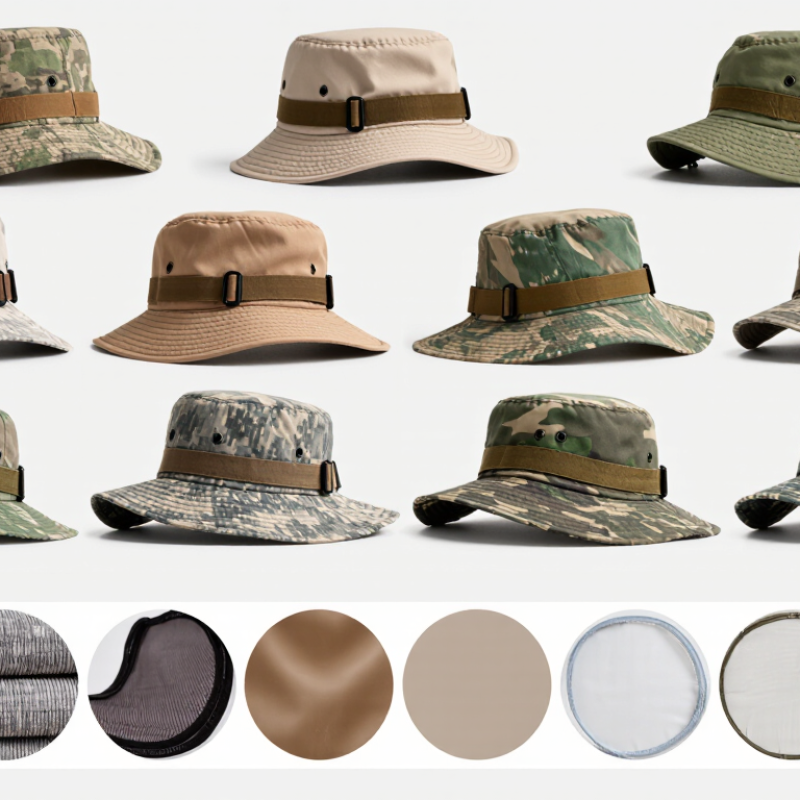
A camo bucket hat is a soft, brimmed hat printed with camouflage patterns, often made from cotton, polyester, or a blend. Its downward brim shades the face and ears, while a flexible crown makes it easy to pack. Some styles include ventilation eyelets, adjustable cords, or quick-drying fabric. Small construction choices matter: a brim that collapses too easily may offer less useful shade outdoors.
People wear these hats for gardening, fishing, hiking, camping, outdoor work, and casual streetwear. Gardeners may value washable fabric; hikers often prefer a light hat that folds into a daypack. Event crews and outdoor retailers may choose matching patterns to create a coordinated look. Camouflage is not magic. Pattern and color can look quite different under bright sun than in a product photo.
For wholesale buyers, the intended wearer should guide material, sizing, and finish. A cotton hat can feel comfortable in mild weather, while a polyester blend may dry faster after light rain. Check stitching around the brim, color consistency across samples, and whether the fit suits different head sizes. One detail is easy to overlook: some customers want a subtle pattern, not a high-contrast print. It is worth asking buyers before ordering deeply.

For wholesale camo bucket hats, compare fabric weight, weave, and color consistency before focusing on price. Textile Exchange’s Materials Market Report 2024 estimates that global fiber production reached 124 million tonnes in 2023, with polyester accounting for about 57 million tonnes. That scale makes fiber content worth checking, but it does not guarantee a durable hat. Ask suppliers for material specifications and a sample. Inspect the brim: it should hold its shape without feeling stiff, and the crown should sit comfortably over the ears. Check camouflage placement across seams, too. A small pattern mismatch is common, but large gaps can make a bulk order look careless.
Construction details affect everyday wear. Compare sweatband softness, ventilation eyelets, stitching density, and whether the brim can be folded without creasing permanently. Request test results when available, including colorfastness and seam-strength data; a product sheet alone is not proof of performance. For fabric durability, ASTM D5034 describes a grab test for breaking strength, though it does not assess the finished hat by itself. Ask how samples and production batches are checked.
This step can feel slow. It is still useful. One detail is easy to overlook: sizing. Confirm head-circumference measurements and tolerances, then compare them with a physical sample. Supplier descriptions can be vague, and I would not rely on photos alone.
Camo bucket hats work best when the pattern suits the setting and the fabric suits the season. Woodland prints mix muted greens, brown, and black, while desert patterns use sand, tan, and softer contrast. Digital squares can look crisp from a distance, but tiny details may blur on textured fabric. Ask for a physical sample. Photos can be misleading.
For wholesale orders, cotton twill offers a familiar, breathable feel and holds its shape well in moderate weather. A cotton-polyester blend may dry faster and resist wrinkles, though it can feel warmer under strong sun. Lightweight ripstop adds a subtle grid and helps limit small tears. Check the brim stitching and crown seams; these are easy to overlook in a sample review.
Style matters, too. A soft, unstructured crown packs flat, while a firmer crown keeps a neater silhouette on display. Wide brims provide more shade, but some buyers find them floppy in wind. Small side eyelets improve airflow, yet poor placement can weaken the fabric. Fit is not always predictable. Compare measurements across sizes, then test hats on different head shapes before confirming quantities.
Typical fabric-weight ranges for materials used in bucket hats. Actual weights vary by supplier, fabric construction, and finish; confirm specifications with your manufacturer.
How to Evaluate the 10 Best Camo Bucket Hats
Wholesale buyers should score each camo bucket hat against practical retail needs. Check fabric weight, brim width, crown depth, stitching, ventilation, and size range. A hat that looks sharp on a product page may feel stiff after two hours. Ask for samples. Wear them outdoors, fold them repeatedly, and inspect loose threads under bright light.
Textile Exchange’s 2024 Materials Market Report states that global fiber production reached 124 million tonnes in 2023. That figure makes material selection more important. Compare cotton, recycled polyester, and blended fabrics by hand feel, drying speed, shrinkage, and care requirements. Request test records for colorfastness and seam strength. Dark camouflage can fade unevenly. It happens.
Fit deserves a separate score. Measure the internal circumference, not only the label size. Record crown height and brim diameter in millimeters. The NRF and Appriss 2024 Returns Report estimated that 16.9% of U.S. retail sales were returned in 2024. Poor sizing can increase avoidable returns. Review ten samples side by side, then rate comfort, packability, decoration space, and carton efficiency. A perfect ranking is unrealistic. One hat may offer better structure, while another feels cooler in humid weather. Wholesale decisions should reflect the target customer, climate, selling channel, and expected reorder frequency.
For wholesale buyers comparing the 10 best camo bucket hats, price should not stand alone. Grand View Research valued the global headwear market at approximately $22.87 billion in 2022, with continued growth forecast through 2030. That demand creates supplier choice, but also inconsistent quality. A practical wholesale target is often $4–$12 per hat, depending on cotton weight, embroidery, lining, packaging, and order volume. Treat this range as a sourcing benchmark, not a fixed market rule.
Minimum order quantity can change the real cost quickly. Many factories request 50–100 pieces per color, while custom prints may require 300 pieces or more. Ask for a pre-production sample. Check stitching, crown shape, brim recovery, sweatband comfort, and colorfastness after washing. Small details matter. McKinsey’s State of Fashion 2024 report described fashion growth as modest, increasing pressure on buyers to control inventory and avoid over-ordering. A lower MOQ may cost more per unit, but it can reduce dead stock.
Supplier selection needs documented evidence. Request factory photos, material specifications, inspection procedures, production lead time, and carton measurements. Compare landed cost, not only the quoted unit price. The cheapest offer can become expensive after rework or delayed delivery. I would also test two suppliers before committing to a large order. This takes time. Still, published market reports rarely capture returns, shade variation, or uneven sizing. That gap deserves honest attention.
| Hat Style | Typical Wholesale Price (USD/Unit) | Indicative Minimum Order | Common Materials | Best For | Supplier Selection Checks |
|---|---|---|---|---|---|
| Classic Cotton Twill Bucket Hat | $3.00–$7.00 | 50–100 units | Cotton twill | Everyday retail and promotional merchandise | Check fabric weight, stitching consistency, and size measurements. |
| Reversible Camo Bucket Hat | $4.00–$9.00 | 100–200 units | Cotton or polyester blends | Retailers seeking two looks in one product | Inspect both sides for clean seams, secure labels, and color consistency. |
| Ripstop Camo Bucket Hat | $5.00–$11.00 | 100–200 units | Cotton-polyester ripstop | Outdoor, camping, and workwear collections | Request material details and check the grid weave and seam reinforcement. |
| Lightweight Packable Bucket Hat | $4.00–$10.00 | 100–300 units | Polyester or nylon | Travel, festival, and warm-weather assortments | Test how it folds, whether it recovers its shape, and how it is packaged. |
| Wide-Brim Camo Bucket Hat | $5.00–$12.00 | 100–200 units | Cotton, polyester, or blended fabric | Outdoor markets and sun-protection ranges | Confirm brim dimensions, crown fit, and any sun-protection claims with documentation. |
| Mesh-Ventilated Camo Bucket Hat | $5.00–$12.00 | 100–300 units | Polyester or cotton blend with mesh panels | Hot-weather recreation and outdoor activities | Check mesh attachment, airflow panel placement, and durability after washing. |
| Adjustable Drawcord Bucket Hat | $4.00–$10.00 | 100–200 units | Polyester, nylon, or cotton blend | Hiking, fishing, and active outdoor use | Test cord adjusters, attachment points, and fit across the stated size range. |
| Structured Camo Bucket Hat | $5.00–$12.00 | 100–300 units | Cotton twill or polyester blend | Uniform programs and customers who prefer a defined shape | Review crown construction, shape retention, and packing requirements. |
| Custom-Printed Camo Bucket Hat | $6.00–$15.00 | 200–500 units | Polyester, cotton, or blended fabric | Private-label, event, and coordinated merchandise orders | Approve a pre-production sample and confirm print placement, color, and artwork rights. |
| Recycled-Polyester Camo Bucket Hat | $6.00–$14.00 | 200–500 units | Recycled polyester, where verified | Buyers seeking recycled-content options | Request valid material documentation and verify any recycled-content claims. |
Price and minimum-order figures are indicative planning ranges, not supplier quotations. Actual costs and order minimums vary by fabric, customization, quantity, shipping terms, and production location. Confirm specifications, samples, lead times, and landed costs directly with prospective suppliers.